AHA & BHA: What's the Difference and Which Do You Need?
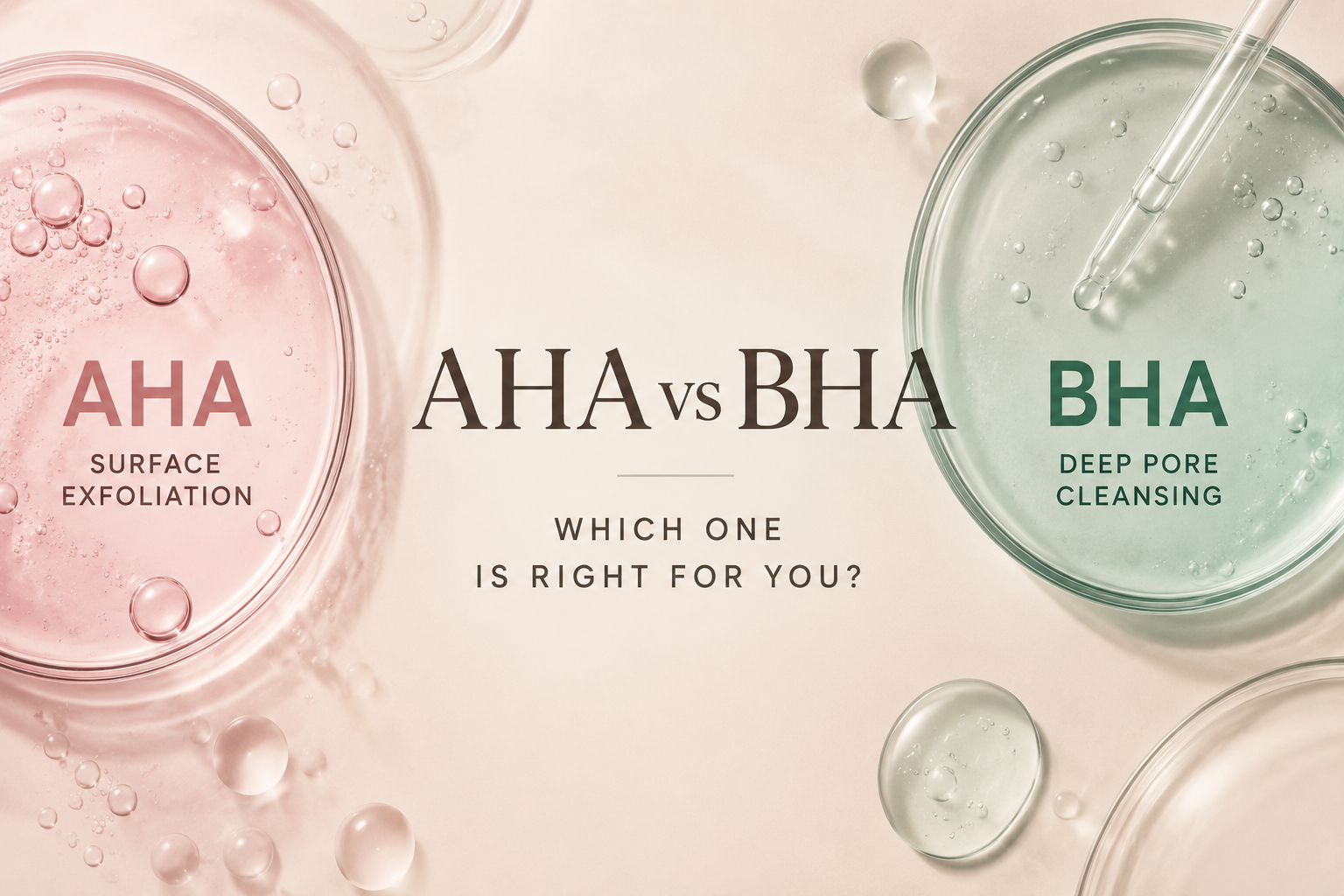
If you've ever stood in front of a skincare shelf wondering what AHA and BHA actually mean, you're not alone — the acronyms get thrown around a lot, but the difference between them actually matters for which one is right for your skin.
What Is AHA (Alpha Hydroxy Acid)?
AHA is a water-soluble acid that works on the surface of the skin. The most common form is glycolic acid, which has the smallest molecule size among AHAs, allowing it to exfoliate effectively and help visibly improve:
Dullness and uneven texture
Fine lines and the look of sun damage
Rough, flaky patches of skin
Because it works on the surface, AHA is generally better suited for dry or sun-damaged skin that needs help shedding dead skin cells and revealing a smoother, brighter look.
What Is BHA (Beta Hydroxy Acid)?
BHA is oil-soluble, which means it can get past the oil sitting in your pores rather than just sitting on top of skin. The most common form is salicylic acid, which penetrates into pores to help clear out:
Excess oil
Blackheads and clogged pores
Breakouts before they surface
This makes BHA the better pick for oily or acne-prone skin, since it works where the problem actually starts — inside the pore, not just on the surface.
AHA vs BHA — The Simple Way to Remember It
AHA = surface exfoliation. Best for dullness, texture, and dry skin.
BHA = deep pore exfoliation. Best for oil, blackheads, and acne-prone skin.
If your main concern is rough texture and a dull look, lean AHA. If it's breakouts and clogged pores, lean BHA. And if you deal with both — dullness and congestion — a combined AHA + BHA formula addresses both at once instead of needing two separate products.
Who Should Be Careful With AHA/BHA?
Chemical exfoliants are effective, but they're also easy to overuse. A few ground rules:
Start with 1–2 times a week, not daily
Always follow with sunscreen the next morning — exfoliated skin is more sun-sensitive
Avoid combining AHA/BHA with retinol on the same night when starting out, to avoid over-exfoliating
Do a patch test first if you have sensitive skin
Bodilicious AHA & BHA Serum
If you want both benefits in one step, the Bodilicious AHA & BHA Serum combines glycolic acid and salicylic acid to target dullness, uneven texture, and clogged pores together. Aloe vera and centella asiatica are included to help calm skin through the exfoliation process, so it's formulated to feel soothing rather than stripping — even for acne-prone and sensitive skin.
How to use: Apply in the evening, 1–2 times a week to start (up to 3x once skin builds tolerance). Always follow up with sunscreen the next morning.
FAQs
Q: Can I use AHA and BHA together? Yes — many serums, like combination exfoliating formulas, include both in one product so you don't need to use them separately. Start slow (1–2x a week) if you're new to chemical exfoliants.
Q: Is AHA or BHA better for acne? BHA (salicylic acid) is generally better for acne since it's oil-soluble and can get inside the pore where breakouts start.
Q: Can I use AHA/BHA every day? It's not recommended, especially when starting out. Most people see the best results using it 1–3 times a week, giving skin time to recover between uses.
Q: Do I need to wear sunscreen after using AHA/BHA? Yes, always. Exfoliating acids increase skin's sensitivity to the sun, so daily SPF the next morning is essential.