Azelaic Acid Serum: The One Ingredient That Fixes Oily Skin AND Dark Marks
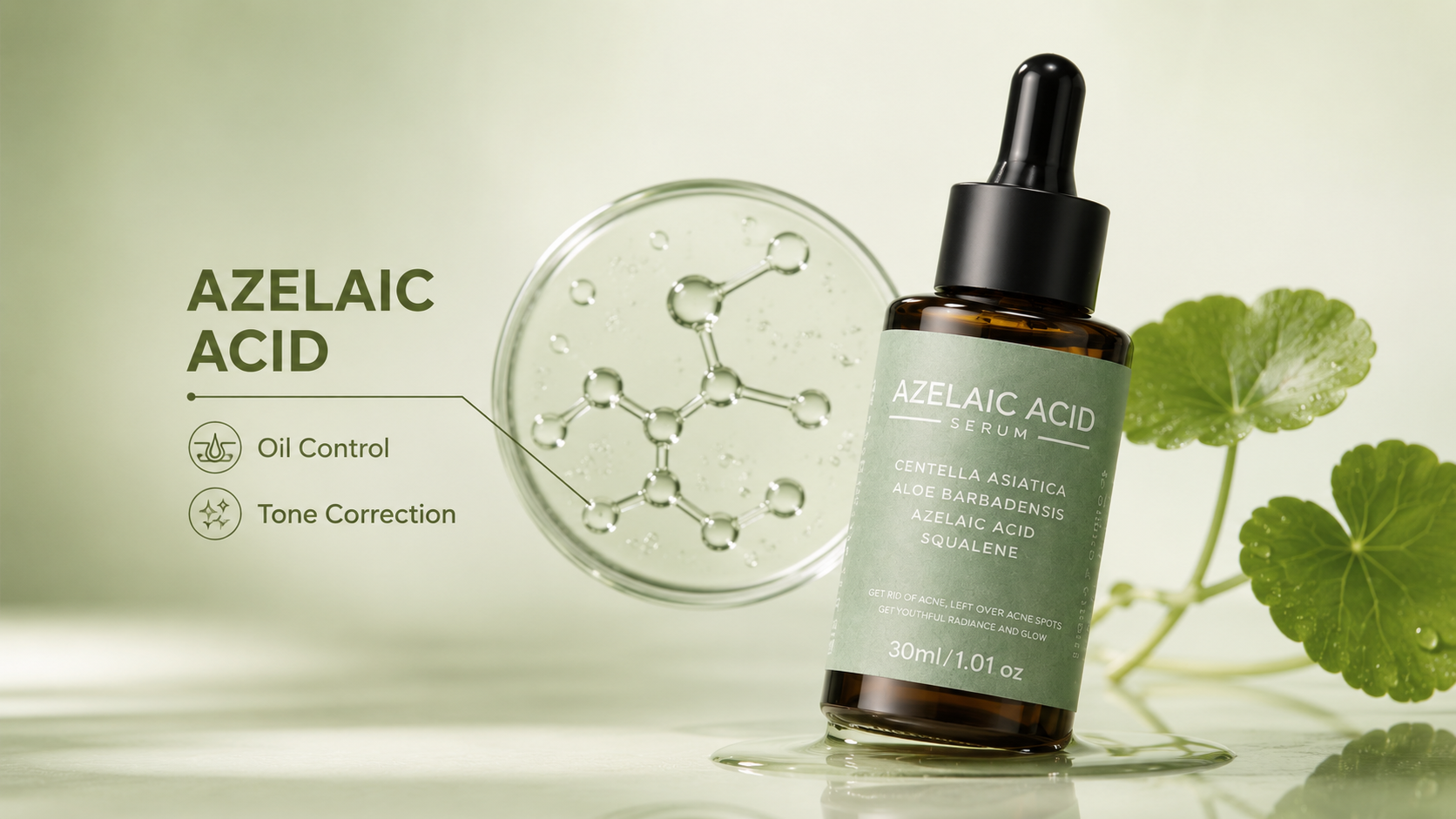
Most skincare routines end up split into two problems and two products: something to control oil and breakouts, and something separate to fade the dark marks those breakouts leave behind. Azelaic acid is one of the rare ingredients that genuinely does both — and does it gently enough for daily use.
If you've got oily or acne-prone skin dealing with leftover post-blemish marks, here's why this ingredient deserves a permanent spot in your routine.
What Is Azelaic Acid?
Azelaic acid is a naturally occurring compound found in grains like wheat, rye, and barley. It's also produced naturally on skin by a yeast that's part of the skin's own microbiome — which is part of why it tends to be so well tolerated topically, even by skin that reacts to stronger actives.
In skincare, it typically shows up in concentrations between 5% and 20%, with over-the-counter serums generally on the gentler end of that range.
Why It's a Multitasker: Oil Control Meets Tone Correction
Azelaic acid works on skin in a few distinct ways at once:
Regulates oil and unclogs pores — it has a mild anti-keratinizing effect, meaning it helps normalize how skin cells shed instead of letting them build up and clog pores
Fights acne-causing bacteria — its antibacterial properties target the bacteria involved in breakouts, helping reduce and prevent them
Calms inflammation — it's anti-inflammatory, so it helps bring down the redness and swelling that comes with active breakouts
That combination is what makes it useful for oily and acne-prone skin specifically — it's treating the environment that causes breakouts, not just masking symptoms.
How Azelaic Acid Fades Dark Marks (Without Irritation)
The tone-correcting side of azelaic acid comes down to one specific mechanism: it inhibits tyrosinase, the enzyme skin uses to produce melanin. By slowing that process down, it helps fade the look of dark spots and post-inflammatory hyperpigmentation — the marks breakouts leave behind, and one of the most common frustrations for oily and acne-prone skin.
Unlike some brightening ingredients, azelaic acid does this without increasing sun sensitivity, and it's generally considered gentle enough to use alongside other actives without the irritation risk that comes with stronger exfoliants.
Is It Gentler Than Other Acids?
Compared to AHAs like glycolic acid, azelaic acid works differently — glycolic acid exfoliates more on the surface, while azelaic acid works at a deeper level with a milder overall feel. That makes it a good option if your skin doesn't tolerate frequent exfoliation well, or if you're looking for a daily-use active rather than a once- or twice-a-week treatment.
It's also considered a stable ingredient, meaning it holds up well when layered with other actives in a routine — no breaking down or losing effectiveness the way more reactive ingredients can.
How to Use Bodilicious Azelaic Acid Serum
Bodilicious Azelaic Acid Serum combines Azelaic Acid with Panthenol to support both oil control and tone in one step. Apply a few drops to cleansed skin as part of your evening routine, daily. Follow with a moisturizer, and always use sunscreen the next morning to protect the progress you're making overnight.
The Takeaway
Oily skin and dark marks usually get treated as two separate problems — but azelaic acid treats them as one. It's why Bodilicious Azelaic Acid Serum has become a routine staple for skin that needs both oil control and tone correction, without the irritation that comes with stacking multiple harsher actives.
Ready to try it? A few drops, every evening, is all it takes.