Does Sunscreen Cause Acne? The Truth for Oily, Acne-Prone Skin
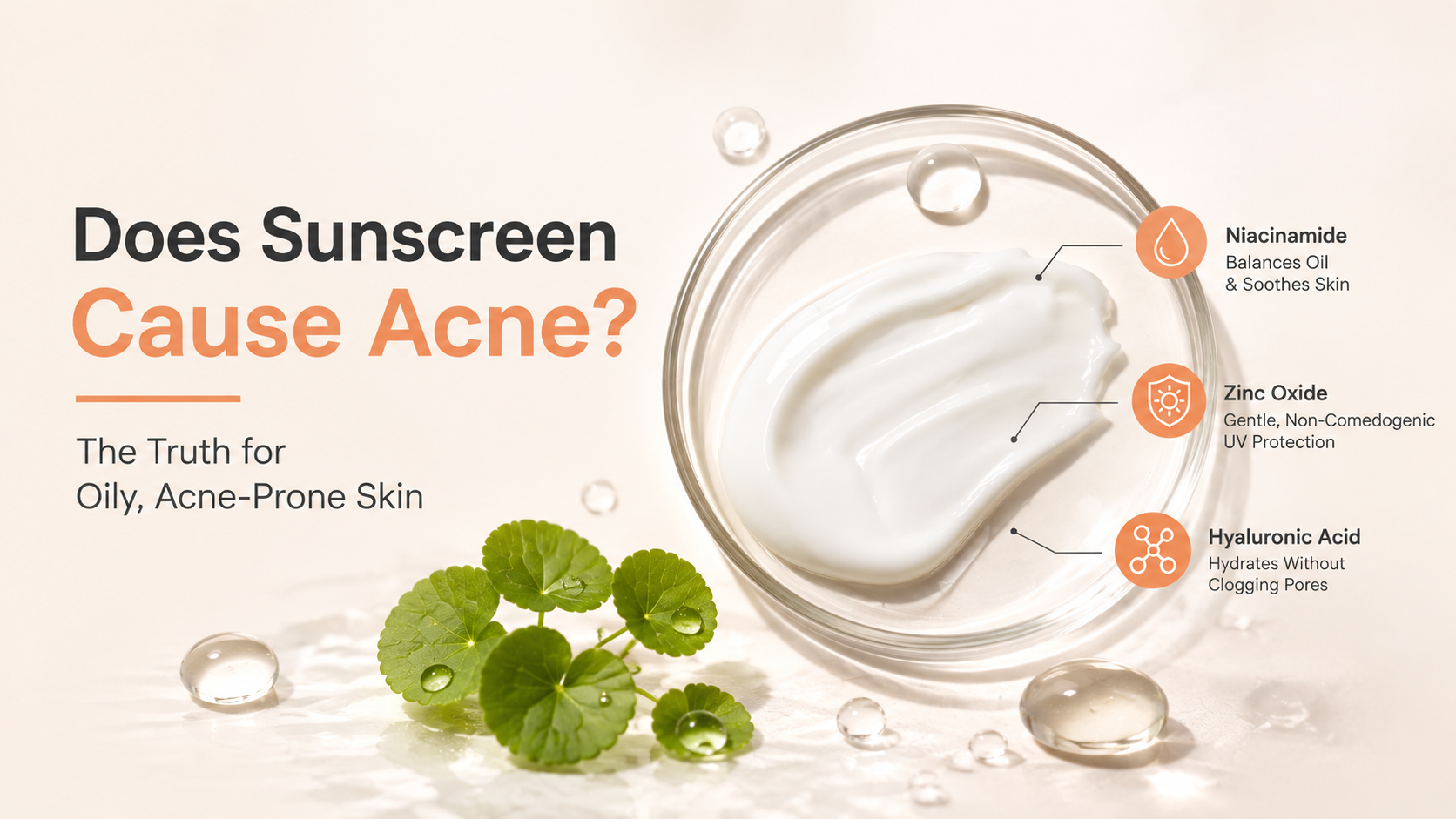
If you've broken out after starting a new sunscreen and sworn off SPF ever since, you're not imagining the connection — but the actual cause is more specific than "sunscreen causes acne," and understanding it means you don't have to choose between sun protection and clear skin.
Where This Myth Comes From
This belief usually starts from a real, frustrating experience: someone applies sunscreen, breaks out a few days later, and reasonably connects the two. But the breakout is typically caused by specific ingredients in that particular formula, not sunscreen as a category. A few real culprits:
Heavy, oil-based formulas — some sunscreens use thick, occlusive oils that sit on top of skin and trap sweat, sebum, and bacteria underneath
Comedogenic ingredients — specific oils and waxes known to clog pores can be present in some formulas, particularly older or budget sunscreen formulations
Not removing it properly — sunscreen residue left on skin overnight, or after a sweaty day, can contribute to clogged pores regardless of the formula
Layering too many products — applying sunscreen over already-heavy makeup or skincare can compound congestion, making it hard to tell which product is actually responsible
What Actually Causes Acne (It's Usually Not Just One Thing)
Acne is driven by a combination of excess oil production, clogged pores, bacteria, and inflammation — sunscreen only becomes a factor if the specific formula contributes to that clogging. This is why two people can use the same sunscreen with completely different results: skin type, existing oiliness, and how thoroughly it's removed all play a role.
How to Choose Sunscreen Without Triggering Breakouts
Look for "non-comedogenic" on the label This means the formula has been designed specifically not to clog pores — a meaningful difference for acne-prone skin.
Choose lightweight, liquid, or gel formulas over thick creams Liquid sunscreens tend to absorb faster and sit lighter on skin, reducing the chance of trapped oil and sweat underneath.
Try: Bodilicious Liquid Sunscreen — SPF 50+++ with broad-spectrum UVA and UVB protection, formulated to be non-comedogenic and won't clog pores, with a lightweight, fast-absorbing, no-white-cast finish suitable for acne-prone and oily skin.
Cleanse thoroughly at the end of the day Removing sunscreen properly, rather than letting it sit overnight, reduces the chance of it contributing to clogged pores.
Don't skip sunscreen to avoid the risk Skipping sun protection altogether is generally the worse trade-off — unprotected UV exposure can worsen the appearance of post-acne dark marks and accelerate visible signs of aging, which usually matters more long-term than the risk from a properly formulated, non-comedogenic sunscreen.
FAQs
Q: Does sunscreen cause acne on the face specifically? Sunscreen itself doesn't cause acne, but heavy or comedogenic formulas can contribute to clogged pores on the face, especially on oily or acne-prone skin. A lightweight, non-comedogenic formula avoids this.
Q: Is liquid sunscreen better than cream sunscreen for acne-prone skin? Liquid and gel formulas tend to be lighter and absorb faster than thick creams, making them generally better suited for oily and acne-prone skin.
Q: Should I stop wearing sunscreen if I have acne-prone skin? No — skipping sunscreen leaves skin more vulnerable to sun damage and can worsen the appearance of post-acne marks over time. Switching to a non-comedogenic formula is a better solution than skipping sun protection.
Q: What does "non-comedogenic" actually mean? It means a product has been formulated specifically to avoid clogging pores, making it a safer choice for acne-prone or oily skin compared to formulas without that designation.