Why Your Hair Falls More in Monsoon (And the Scalp Routine That Actually Fixes It)
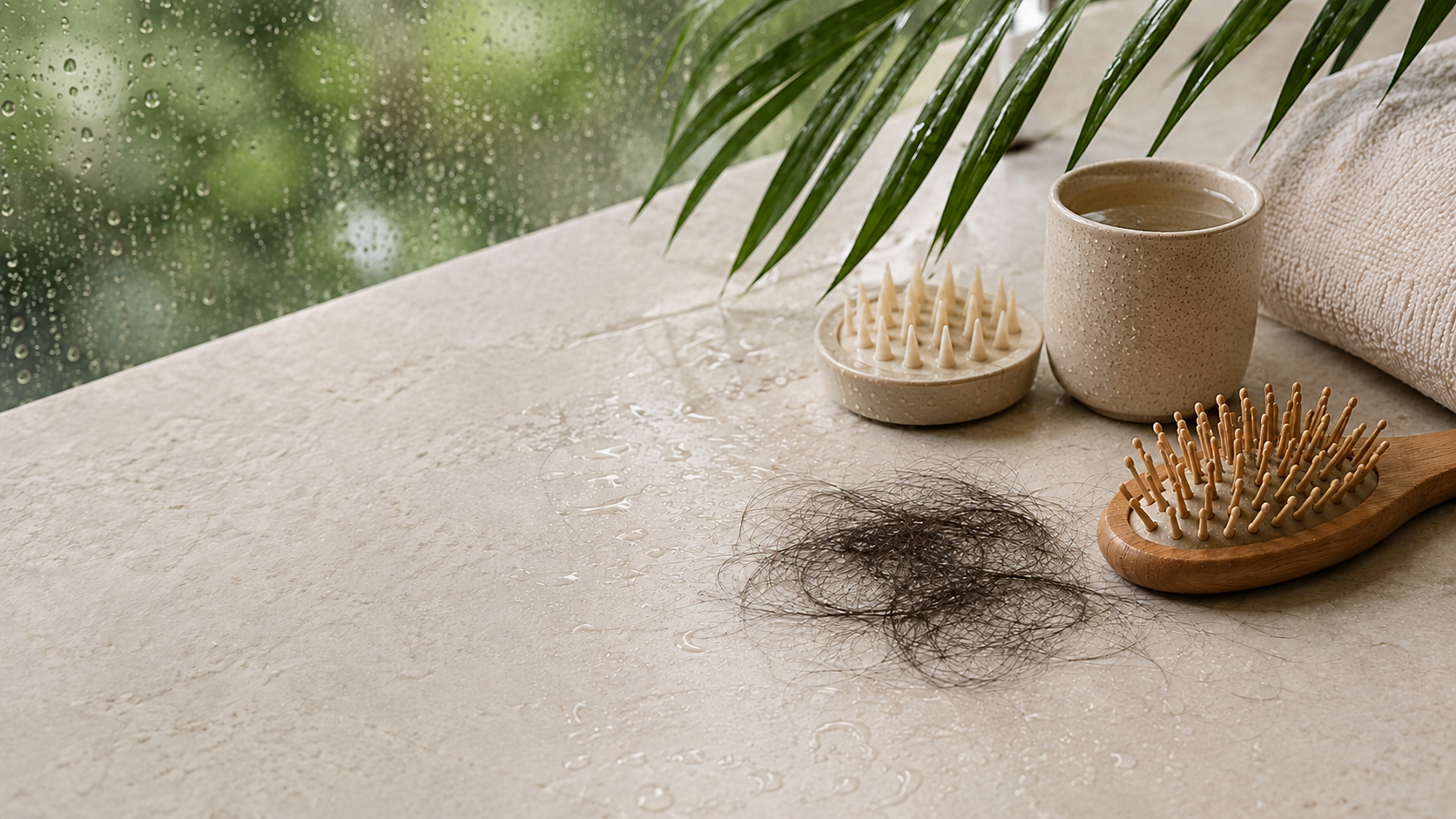
If your hairbrush is suddenly looking like a crime scene, you're not imagining it. Monsoon hair fall is one of the most common concerns dermatologists hear about between June and September in India — and no, it's not "just seasonal" in the vague, nothing-to-be-done-about-it sense. There are real, identifiable reasons behind it, and a few simple changes to your routine can make a genuine difference. Let's get into it.
What's Actually Happening to Your Hair Right Now
Monsoon puts your scalp through a very specific kind of stress. Humidity causes the hair shaft to absorb moisture and swell, which makes strands more fragile and prone to snapping — this is why hair that felt fine in winter suddenly feels rough and breaks at the slightest tug. At the same time, higher humidity ramps up oil (sebum) production on the scalp, creating a warm, moist environment that's ideal for fungal and bacterial growth.
Then there's rainwater itself. Urban rain tends to be more acidic and carries pollutants that strip the hair's protective layer and irritate the scalp on contact. Add in the habit of tying up damp hair or sleeping with a wet scalp — both of which trap moisture against the skin — and you've got a perfect setup for weakened strands, dandruff flare-ups, and increased shedding.
The good news: most monsoon hair fall is temporary and manageable with the right scalp-first approach, not a hair-first one. Healthy hair starts at the root, literally.
The Scalp Care Routine That Works
1. Don't let rainwater sit on your scalp. If you get caught in the rain, rinse it out as soon as you reasonably can with a mild, sulfate-free shampoo. Letting acidic rainwater and grime linger is one of the fastest ways to trigger scalp irritation and fungal buildup.
2. Wash smarter, not necessarily more. Two to three washes a week with a gentle, sulfate-free formula is generally the sweet spot for monsoon — enough to keep the scalp clean and free of excess oil without stripping it and triggering a rebound in sebum production. Use lukewarm or cool water rather than hot, which helps seal the hair cuticle and reduces breakage.
3. Oil before you wash, not after. Applying a lightweight oil — coconut, almond, or rosemary are solid options — about 30 minutes before shampooing helps strengthen the roots and boosts circulation to the scalp. Skip leaving oil in overnight during monsoon, though; on an already humid scalp, it can trap moisture and encourage fungal growth rather than prevent it.
4. Never tie up or sleep on wet hair. This one sounds minor but matters a lot. A damp scalp under a tight braid or bun, especially overnight, is essentially an incubator for the yeast and bacteria that drive dandruff and folliculitis. Let hair air-dry at least partially before tying it back, and always dry it before bed.
5. Watch for the early signs of fungal or bacterial scalp issues. Persistent itching, flaking that doesn't respond to a regular anti-dandruff wash, small bumps, or a slightly sour smell on the scalp are signs of microbial overgrowth rather than plain dryness. These need targeted anti-fungal or anti-bacterial scalp care, not just "more moisture."
6. Keep the rest of your routine barrier-focused. It's not just your face that benefits from barrier support in monsoon — your scalp does too. A compromised scalp barrier is more reactive, more oil-prone, and more susceptible to irritation. Gentle, non-stripping cleansers and lightweight, non-comedogenic scalp serums help keep that barrier intact through the humidity swings of AC-to-outdoors-and-back that most of us live in during this season.
How Much Shedding Is Actually Normal?
It's worth knowing where the line is. Losing somewhere in the range of 50-100 strands a day is considered normal hair turnover, and a mild uptick during monsoon is common and usually temporary. But if you're consistently losing significantly more than that, noticing thinning patches, or dealing with scalp pain and visible inflammation, that's a signal to see a dermatologist rather than wait it out — especially if the increased shedding continues past two to three months, which is roughly how long a purely seasonal phase should last.
A Few Habits Worth Adding This Season
Beyond the wash routine, small daily habits add up. Carry a light, breathable scarf or cap for unavoidable rain exposure rather than letting hair get repeatedly soaked and re-dried. Switch to a wider-tooth comb on wet hair, since hair is at its most fragile when damp and swollen. And if you're someone who colors or chemically treats your hair, consider dialing back additional processing until the season passes — chemically treated strands are already more porous and take on monsoon damage faster.
None of this requires an elaborate 10-step overhaul. It's really about protecting the scalp environment first, since everything else — shine, strength, growth — follows from a scalp that isn't fighting excess oil, trapped moisture, or irritation all season long.
The Takeaway
Monsoon hair fall has clear, physiological causes — humidity-driven swelling and breakage, acidic rainwater, and a scalp environment that favors microbial growth — and clear, manageable solutions. A gentle cleansing rhythm, smart oiling, drying hair before tying it up, and paying attention to early warning signs will take you a long way through the season.
If you're looking to build out a monsoon-proof routine, our dermatologically tested scalp and hair care range is formulated with exactly this kind of barrier-first thinking in mind — take a look next time you're browsing, and as always, orders over ₹1500 ship free.
Sources consulted: Apollo Hospitals – Hair Fall During Monsoon, Dr Batra's – Hair Fall During Monsoon, Traya Health – Stop Hair Fall in Monsoon