Kojic Acid for Pigmentation: Does It Really Work?
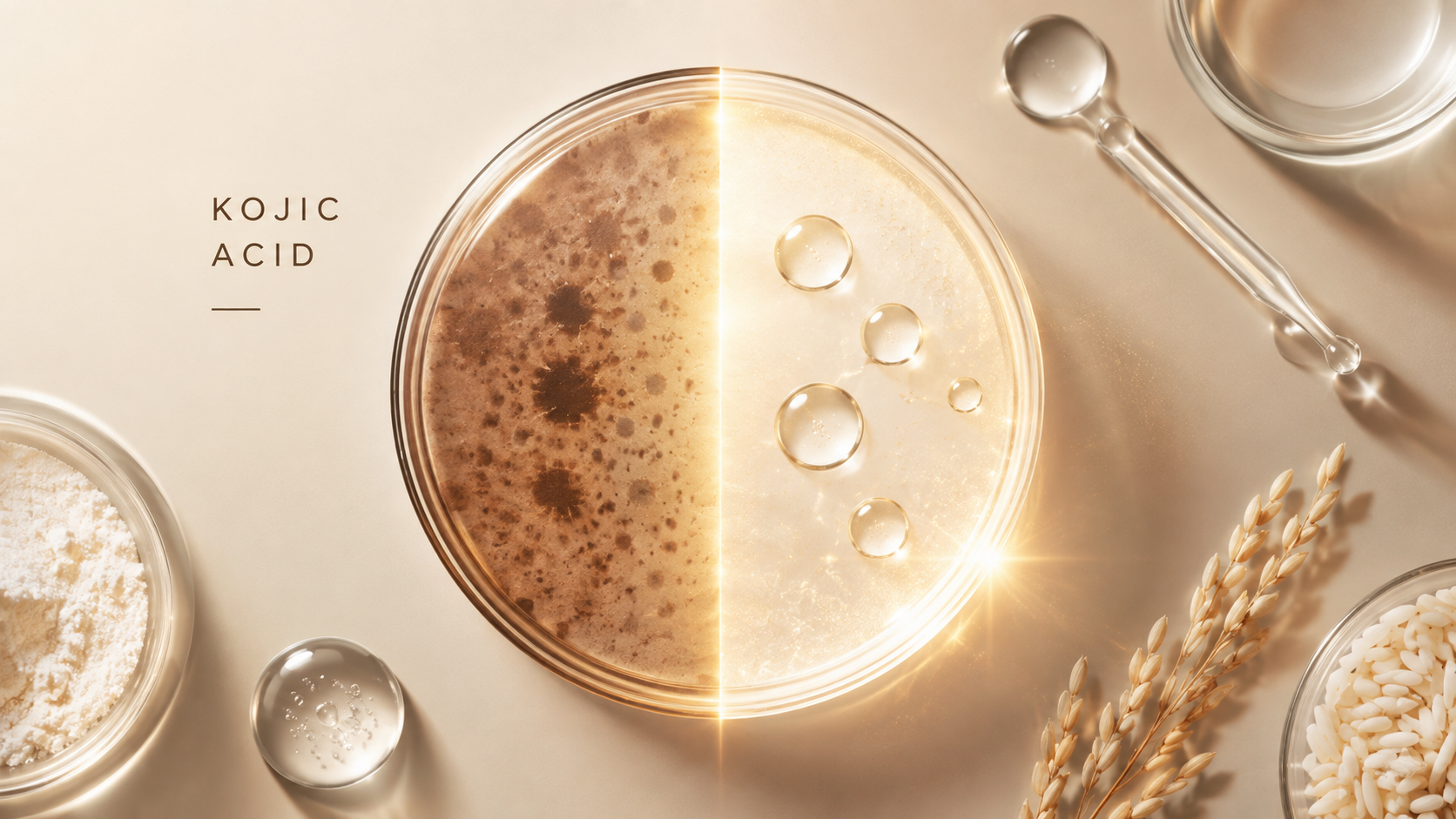
Kojic acid shows up in a lot of pigmentation-focused products, but if you've wondered whether it's a genuinely effective ingredient or just another marketing buzzword, the actual answer is a bit more useful than a simple yes or no.
What Is Kojic Acid?
Kojic acid is a naturally derived ingredient, originally discovered as a byproduct of the fermentation process used to make certain foods like sake and soy sauce. In skincare, it's included specifically for its ability to help fade the look of pigmentation and even out skin tone.
How Does Kojic Acid Actually Work?
Pigmentation and dark spots happen when skin produces excess melanin, often triggered by sun exposure, acne marks, or hormonal changes. Kojic acid works by inhibiting tyrosinase, an enzyme your skin needs to produce melanin in the first place. With less melanin being produced in the treated area over time, existing dark spots gradually appear lighter, and new pigmentation is less likely to intensify.
This is a genuinely different mechanism than an exfoliating acid like glycolic acid, which works by removing dead skin cells from the surface. That's part of why the two are often combined — exfoliation helps clear the way for kojic acid to actually reach and affect the skin more effectively.
Does It Actually Work, or Is It Overhyped?
Kojic acid has real, established use as a skin-brightening ingredient, and it's generally considered a milder option compared to some stronger alternatives, which makes it a reasonable starting point if you're new to treating pigmentation. That said, it's not an overnight fix — visible results typically take consistent use over several weeks, not days.
It's also worth setting realistic expectations: kojic acid helps fade the visible look of existing pigmentation and can help prevent it from worsening, but daily sunscreen is still essential, since ongoing sun exposure will keep triggering new pigmentation regardless of what brightening ingredient you're using.
How Long Does It Take to See Results?
Most people using kojic acid consistently start noticing a visible difference in pigmentation within 8 to 12 weeks. This varies depending on how deep-set the pigmentation is and how consistently the product is used — daily use without sunscreen protection tends to significantly slow down visible progress.
How to Use Kojic Acid Effectively
Cleanse with it daily Using a kojic acid-based cleanser twice a day is a simple, low-commitment way to introduce it into your routine without adding an extra serum step.
Try: Bodilicious Kojic Glycolic Infused Facewash — combines Kojic Acid with Glycolic Acid to exfoliate dead skin cells while helping fade the look of dark spots, tan, and dullness.
Pair it with sunscreen, always This is non-negotiable. Any brightening ingredient's results can be undone by unprotected sun exposure, since UV exposure is what triggers new pigmentation in the first place.
Be patient and consistent Since results build gradually, switching products every few weeks before giving kojic acid enough time to work is one of the most common reasons people feel it "didn't work" for them.
FAQs
Q: Is kojic acid better than vitamin C for pigmentation? Both help with pigmentation but work differently — kojic acid inhibits melanin production at the enzyme level, while vitamin C works more through antioxidant activity. Some people combine both for a more complete approach.
Q: Can I use kojic acid every day? Yes, in cleanser form it's generally suitable for daily use, though serums or leave-on kojic acid products may need a more gradual introduction depending on concentration.
Q: Why hasn't kojic acid worked for my pigmentation yet? Results typically take 8 to 12 weeks of consistent use. Skipping sunscreen or switching products too frequently are the most common reasons people don't see the expected results.
Q: Is kojic acid safe for sensitive skin? Kojic acid is generally considered milder than some other brightening ingredients, but as with any active, patch testing first is recommended for sensitive or reactive skin.