Niacinamide vs Vitamin C Serum: Which Is Right for Your Skin?
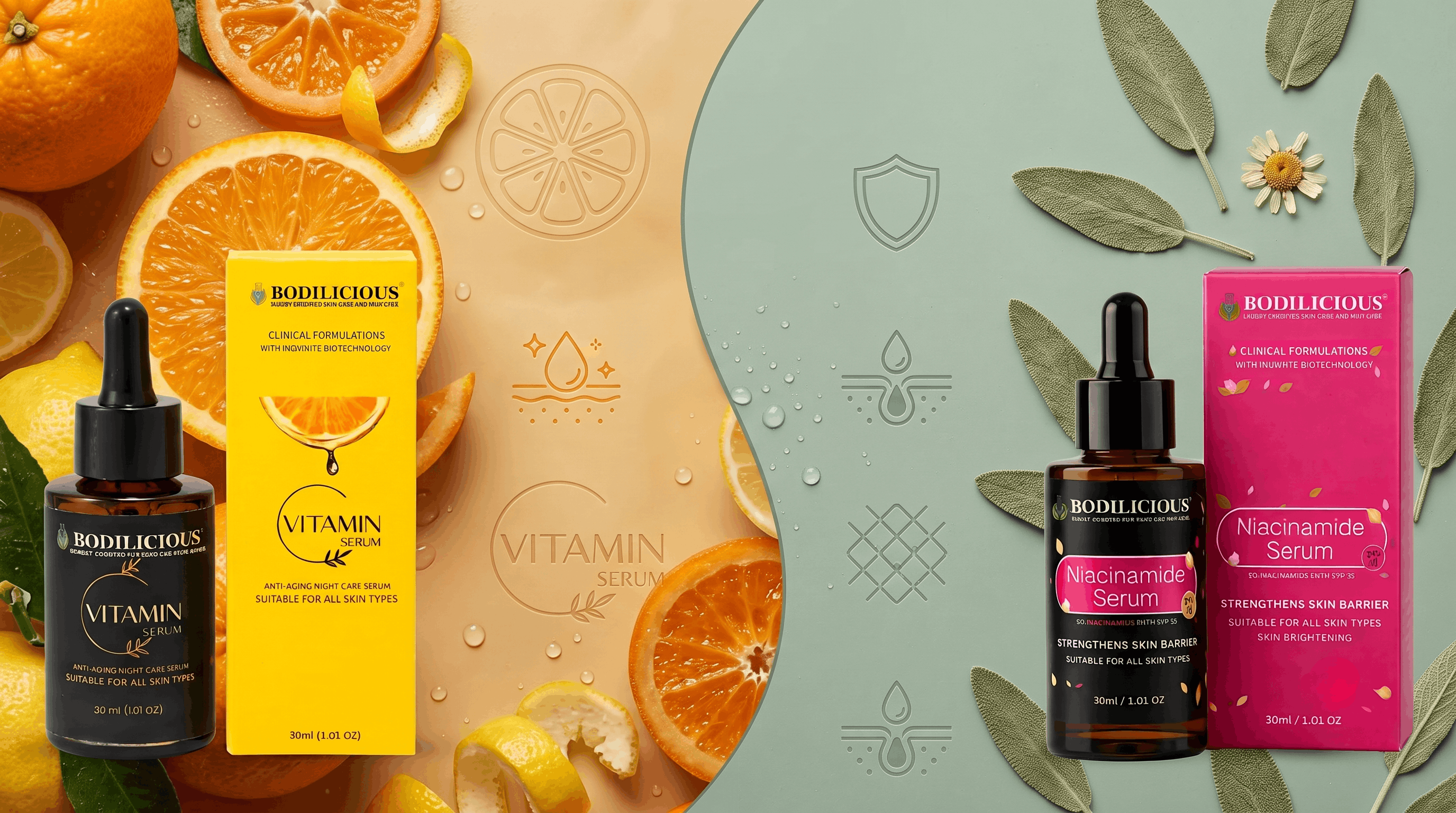
Standing in front of your skincare shelf (or a hundred browser tabs) trying to decide between niacinamide and vitamin C serum? You're not alone. These are two of the most popular serums in skincare right now, and while they're often grouped together, they actually work very differently on your skin.
The short answer: you don't always have to choose. But if you're picking just one to start with, the right answer depends on your skin type, your main concern, and even the time of day you apply your serum.
Let's break it down.
Quick Answer: Niacinamide vs Vitamin C at a Glance
NiacinamideVitamin C: Best forOily/acne-prone skin, redness, large poresDullness, dark spots, uneven toneMain benefitOil control, barrier repair, calmingBrightening, antioxidant protectionBest time to useMorning or nightMorning (under sunscreen)Sensitivity levelVery gentle, beginner-friendlyCan be slightly stronger/reactivePairs well withAlmost everything, including vitamin CNiacinamide, SPF, ferulic acid
What Does Niacinamide Serum Actually Do?
Niacinamide is a form of vitamin B3, and it's often called the "multitasker" of skincare. It works on several layers at once:
Regulates oil production — helpful if you deal with shine or breakouts
Strengthens the skin barrier — locks in moisture and reduces sensitivity over time
Minimizes the look of pores — by keeping them clear and controlling sebum
Calms redness and irritation — great for reactive or rosacea-prone skin
Fades post-acne marks gradually — with consistent use over weeks
Because it's gentle and well-tolerated by almost every skin type, niacinamide is often the first "active" ingredient people add to their routine.
Best for you if: you have oily, acne-prone, or sensitive skin, or you're new to actives and want something low-risk with visible results.
What Does Vitamin C Serum Actually Do?
Vitamin C (usually as L-ascorbic acid or a derivative like ethyl ascorbic acid) is one of the most researched antioxidants in skincare. Its job is different from niacinamide's:
Brightens skin tone — reduces dullness and adds radiance
Fades dark spots and hyperpigmentation — especially sun-induced spots
Neutralizes free radical damage — from sun exposure and pollution
Boosts collagen production — supporting firmer, more youthful-looking skin
Enhances SPF protection — when used underneath sunscreen in the morning
Vitamin C is a powerful daytime ally, but some forms can be less stable or slightly more likely to cause tingling on sensitive skin, especially at higher concentrations.
Best for you if: your main concern is dullness, uneven tone, dark spots, or early signs of aging, and you want extra protection against environmental damage.
Niacinamide vs Vitamin C: Which One Should You Choose?
Ask yourself these three questions:
1. What's my biggest skin concern right now?
Oiliness, breakouts, redness, enlarged pores → Niacinamide
Dullness, dark spots, uneven tone → Vitamin C
2. How sensitive is my skin?
Very reactive or new to actives → start with Niacinamide
Fairly tolerant, used to actives before → Vitamin C works well too
3. When do I want to use my serum?
Morning routine, under SPF → Vitamin C
Anytime, day or night → Niacinamide
Can You Use Niacinamide and Vitamin C Together?
Yes — and it's actually a great combination. The old myth that niacinamide "cancels out" vitamin C has largely been debunked by modern formulations. Most brands now stabilize both ingredients so they work safely together.
A simple way to layer them:
Morning: Vitamin C serum → Niacinamide serum → Moisturizer → SPF
Night: Niacinamide serum (alone or with other actives) → Moisturizer
If you have very sensitive skin, you can also alternate — vitamin C in the morning, niacinamide at night — to ease your skin into both.
Final Verdict
There's no single "better" serum — niacinamide and vitamin C solve different problems:
Choose niacinamide if oil control, pore appearance, and barrier repair are your priority.
Choose vitamin C if brightening, dark spot correction, and antioxidant protection are your priority.
Choose both if you want a well-rounded routine that covers tone, texture, and protection.
Whichever you start with, consistency matters more than the ingredient itself — give any new serum at least 4–6 weeks before judging results.
FAQs
Is niacinamide better than vitamin C for acne? Niacinamide is generally better for active acne and breakouts since it controls oil and calms inflammation. Vitamin C is better for fading marks left behind after acne heals.
Can I use niacinamide and vitamin C on the same day? Yes, they can be used in the same routine, either layered a few minutes apart or applied at different times of day (vitamin C in the morning, niacinamide at night).
Which one should beginners start with? Niacinamide is usually recommended first because it's gentle, versatile, and suits almost every skin type.
Does vitamin C serum expire faster than niacinamide? Yes, vitamin C (especially L-ascorbic acid) is less stable and can oxidize faster once opened. Niacinamide is more shelf-stable. Store both in a cool, dark place and check for color/texture changes before use.