Oats Protein Moisturizer — What It Actually Does for Dry, Dehydrated Skin
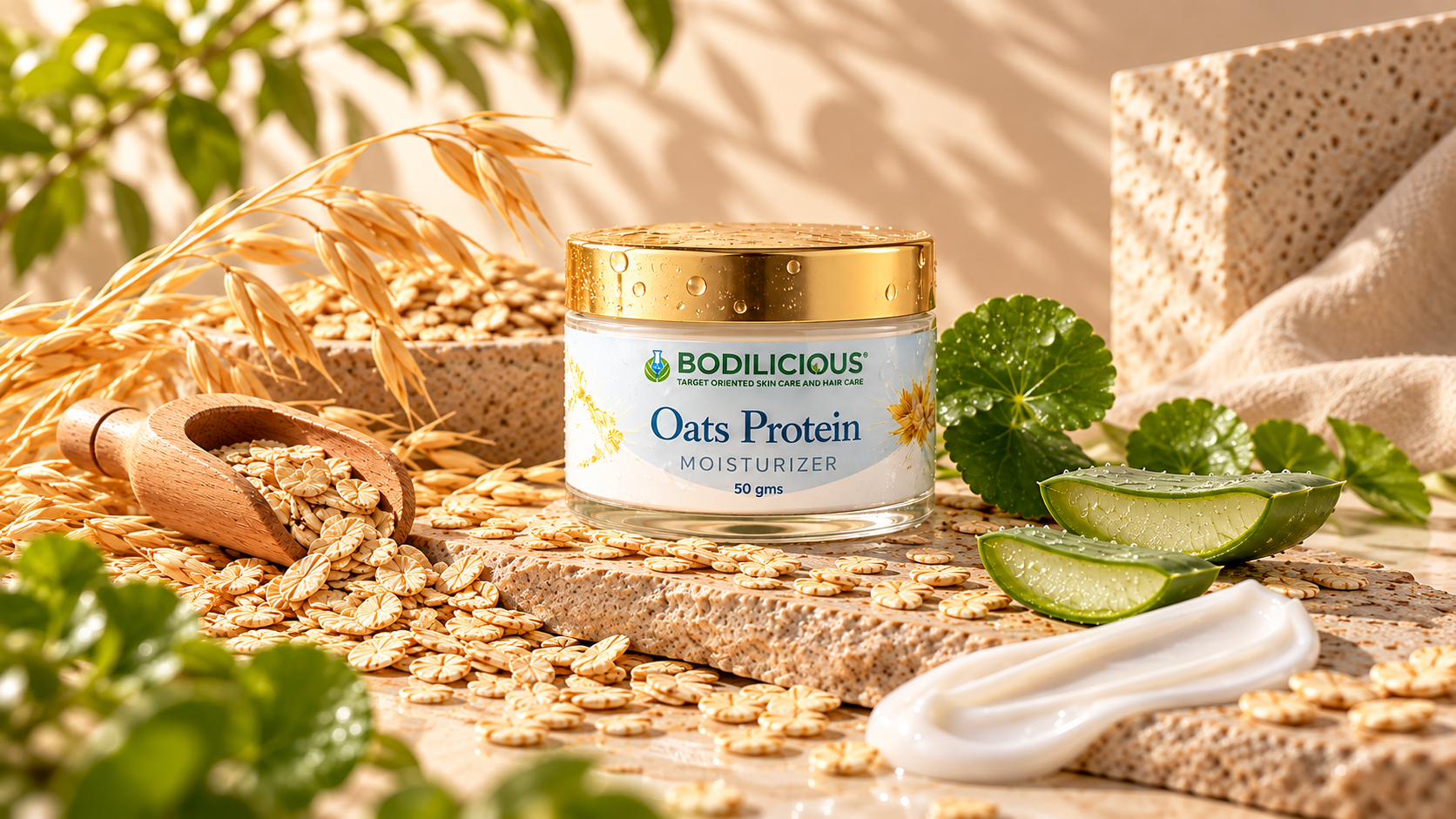
If your skin has been feeling tight, flaky, or just generally under-moisturized no matter how much you slather on, oats might not be the first ingredient that comes to mind — but it's one of the more quietly reliable options for exactly that kind of discomfort.
What Does Oats Extract Actually Do for Skin?
Oats have been used to calm irritated skin for a very long time, and that's largely thanks to their natural fats, proteins, and soothing compounds. In a moisturizer, oats-derived ingredients are generally used to:
Soothe dry, irritated skin, helping take the edge off tightness and discomfort
Support a smoother, healthier-looking complexion over consistent use
Help nourish and support the skin's surface, contributing to the look of a more resilient barrier
Because oats are gentle by nature, they tend to suit skin that's reactive or easily irritated — the kind of skin that doesn't always tolerate stronger actives well.
Why Pair Oats With Panthenol and Centella Asiatica?
Panthenol (Provitamin B5) is one of the most well-established hydrating and soothing ingredients in skincare, commonly used to help skin retain moisture and support comfort in dry or compromised skin.
Centella Asiatica (CICA) brings a calming effect, often included specifically for skin that's reactive, sensitive, or dealing with visible irritation alongside dryness.
Aloe Vera adds a lightweight, additional layer of soothing and hydration on top of the other two.
Together, this combination addresses dryness from a few angles at once — comfort, hydration, and calming — rather than relying on a single heavy occlusive ingredient to do all the work.
Is This Moisturizer Right for Your Skin Type?
This formula is suited to dry, normal, and combination skin, particularly where dehydration or a weakened barrier is the main concern. It's not recommended for acne-prone skin — richer, barrier-repair-focused moisturizers like this one can feel too heavy or occlusive for skin that's already prone to congestion, so acne-prone skin is generally better served by a lighter, oil-free formula instead.
How Long Does Hydration Actually Last?
This moisturizer is formulated to keep skin hydrated for up to 16 hours, which is particularly useful for skin that tends to feel dry or tight by midday or overnight. That said, "up to" is doing real work in that claim — how long hydration actually holds depends on your environment (heating, air conditioning, climate) and how compromised your barrier is to begin with, so consistent daily use matters more than any single application.
How to Use Oats Protein Moisturizer
Step 1: Apply after your serum, morning and evening
Try: Bodilicious Oats Protein Moisturizer — formulated with Oats Extract, Panthenol, Aloe Vera, and Centella Asiatica to soothe dry, dehydrated skin and support a smoother, healthier-looking complexion. Apply all over the face and neck in circular motions, morning and evening, after your serum.
Step 2: Use it consistently
Barrier support and dehydration relief build with regular use rather than appearing after a single application — daily AM and PM use is what the formula is designed around.
Step 3: Follow with sunscreen in the morning
As with any daytime moisturizer, finishing your morning routine with sunscreen protects the results you're working toward rather than undoing them.
Oats Moisturizer vs Other Moisturizing Approaches
Oats Moisturizer vs a hyaluronic acid serum: Hyaluronic acid draws moisture into the skin; this moisturizer helps seal that moisture in and adds its own soothing, barrier-supporting ingredients on top — the two work well layered together rather than as substitutes.
Oats Moisturizer vs a lightweight gel moisturizer: A gel formula suits oilier skin that wants hydration without richness; this cream-based formula is built for drier skin that needs more sustained comfort and barrier support.
Oats Moisturizer vs the Squalene Silica Oats Moisturizer: Both use oats, but for different skin needs — that formula is built around mattifying, pore-blurring benefits for oily and redness-prone skin, while this one is a richer, more classic moisturizer for dry and dehydrated skin specifically.
FAQs
Q: Is this moisturizer suitable for sensitive skin?
Centella Asiatica and Panthenol are both commonly used for their calming properties, which generally makes this a reasonable option for sensitive skin — though anyone with very reactive skin should patch test any new product first.
Q: Can I use this if I have combination skin?
Yes, it's formulated to suit dry, normal, and combination skin. If your T-zone tends to get oily, you may prefer applying a slightly thinner layer there.
Q: Why isn't this recommended for acne-prone skin?
It's a richer, barrier-focused formula built for dryness and dehydration, which can feel heavier than what acne-prone skin typically tolerates well. A lighter, oil-free moisturizer is generally a better fit for breakout-prone skin.
Q: How long until I notice less dryness?
Many people notice an immediate soothing effect on application, but meaningful improvement in overall dryness and barrier comfort tends to build over several weeks of consistent daily use.
Q: Can I use this moisturizer both morning and night?
Yes, it's formulated for AM and PM use as a daily step, applied after your serum.