Blogs
Skincare science, beauty rituals, and ingredient deep-dives from the Bodilicious team.

The Complete Guide to Anti-Aging Skincare for Indian Skin
Anti-aging (or anti-ageing) skincare works best when it is simple and consistent. A broad-spectrum sunscreen every morning, a retinoid such as retinol at night, and a good moisturizer do most of the work for the look of fine lines, uneven tone and firmness. Vitamin C, niacinamide, hyaluronic acid, ceramides, peptides and Coenzyme Q10 are useful supporting players, but their evidence is smaller or weaker. In a 4.5-year trial of about 900 adults, people who used sunscreen regularly showed roughly
17 October 2026
•1 min read
The Bodilicious Skincare Ingredient Glossary (A-Z)
A–Z reference for every active we use — Vitamin C, Azelaic Acid, Niacinamide, Retinol, and more. What each ingredient does, which skin or hair concern it targets, and exactly which Bodilicious product to reach for.
9 October 2026
•1 min read

Best Products for an Even, Bright Skin Tone
An uneven skin tone — dark spots, dullness, patchiness, or rough texture — usually responds best to a small set of targeted products rather than one "miracle" fix: a brightening cleanser to start removing buildup at the surface, a tone-correcting serum (niacinamide, vitamin C, or azelaic acid, depending on your skin type), a weekly exfoliating treatment to address texture specifically, and daily sunscreen, since unprotected sun exposure is one of the most common reasons uneven tone doesn't impro
3 October 2026
•1 min read
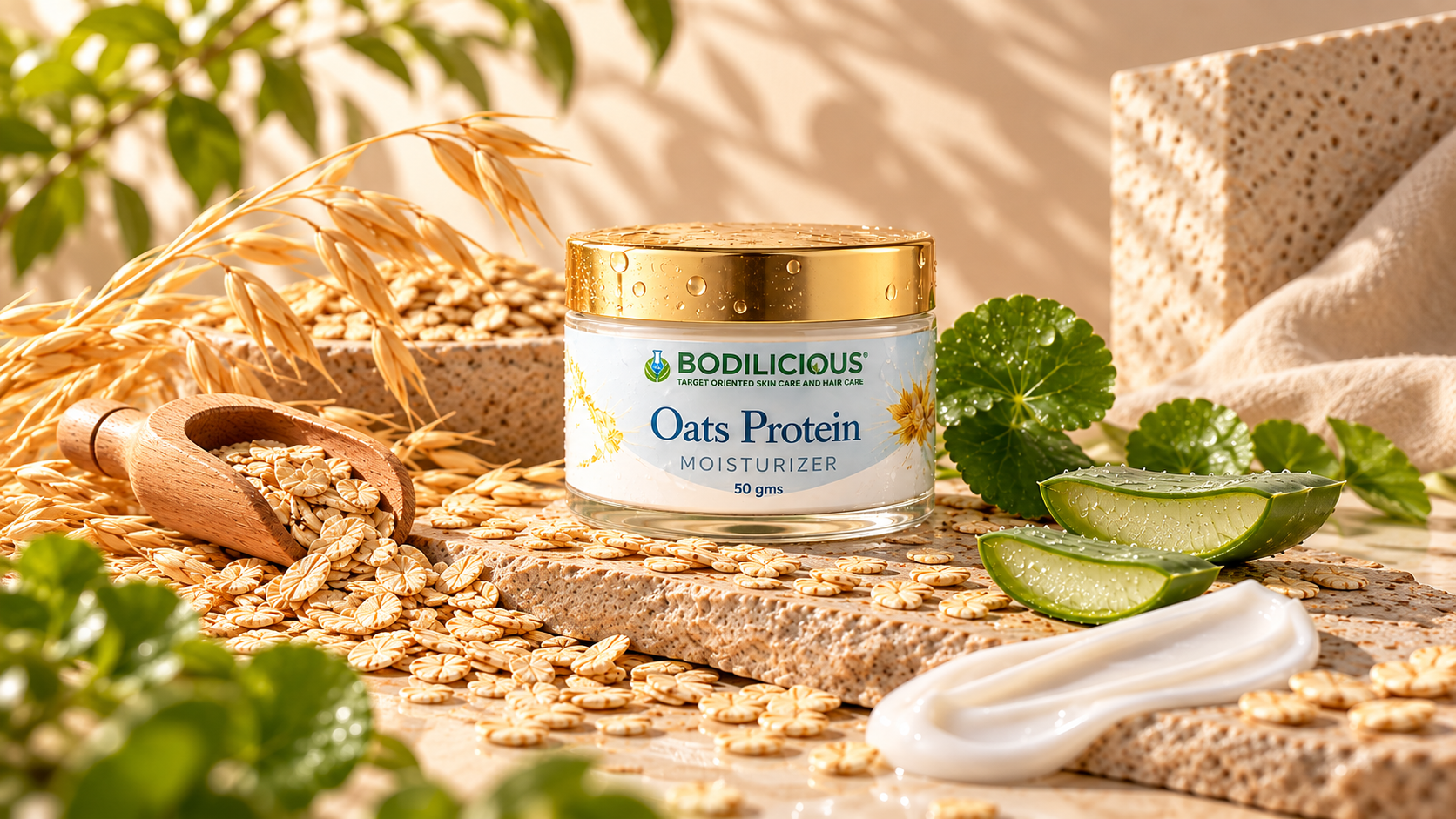
Oats Protein Moisturizer — What It Actually Does for Dry, Dehydrated Skin
Oats have a long-standing reputation for soothing irritated, dry skin, and that reputation holds up in modern formulations — oat-derived ingredients help calm and comfort compromised skin while supporting the barrier. Paired with Panthenol (Provitamin B5), which is widely used for its hydrating and skin-soothing properties, and Centella Asiatica, known for calming reactive skin, an oats-based moisturizer is built specifically for skin that's dry, dehydrated, or showing early signs of a weakened
1 October 2026
•1 min read

Vitamin C Serum — What It Actually Does for Dull, Uneven Skin
Vitamin C is one of the most well-established brightening ingredients in skincare, but not all forms are the same — Ethyl Ascorbic Acid, a more stable and gentler derivative than pure L-ascorbic acid, tends to be better tolerated while still delivering brightening benefits. Paired with Alpha Arbutin, which specifically targets the look of dark spots and uneven tone, and Hyaluronic Acid for hydration, a vitamin C serum works primarily to visibly brighten dull, tired-looking skin and even out tone
27 September 2026
•1 min read

After-Sun Soothing: What to Do About Sunburn and Redness
Sunburn is a genuine inflammatory skin injury caused by UV damage, not just cosmetic redness — which is why the first 24–48 hours matter for comfort and recovery. The most effective immediate steps are cooling the skin, staying well hydrated, moisturizing while skin is still slightly damp, and avoiding further sun exposure. Ingredients like aloe vera, cucumber, and saffron have a long-standing reputation for cooling and calming irritated, sun-exposed skin and are commonly formulated into after-s
25 September 2026
•1 min read

What Are "Baby Hairs"? Why Your Hairline Looks Sparse — and What Actually Helps
"Baby hairs" refers to the fine, short, flyaway hairs along your hairline and edges — not literal infant hair. They're naturally finer and shorter than the rest of your hair, which is why they can look sparse, wispy, or uneven compared to your hairline overall. Common contributors to a thinner-looking hairline include tight hairstyles that pull on the edges (ponytails, braids, buns), postpartum hormonal shedding, heat and chemical styling concentrated at the hairline, and simple genetics or hair
23 September 2026
•1 min read

Why Are My Lips Dark? Causes and How to Fix It
Dark or pigmented lips are usually caused by a combination of factors: sun exposure, dehydration, habitual lip-licking or biting, smoking, friction from harsh exfoliation or ill-fitting products, and simply natural pigmentation that varies from person to person. Lips are especially vulnerable to pigmentation because the skin there is thinner than the rest of the face and doesn't produce its own protective melanin as effectively, meaning sun damage shows up more visibly and more quickly. Managing
19 September 2026
•1 min read

Bhringraj and Amla for Hair Fall: What They Actually Do
Bhringraj (Eclipta alba) and Amla (Indian gooseberry) are two of the most widely used ingredients in traditional Ayurvedic hair care, most often combined in oils meant to nourish the scalp and support stronger-looking roots. Bhringraj is prized for its scalp-nourishing, circulation-supporting reputation, while Amla brings a concentrated dose of antioxidants and vitamin C thought to support scalp health and add shine. Neither ingredient works as an overnight fix — like most hair fall routines, vi
18 September 2026
•1 min read

Squalene for Skin — What It Does for Redness and Sensitivity
Squalene is a lightweight, naturally occurring lipid that closely resembles the oils your own skin already produces, which is why it's exceptionally well tolerated even by sensitive or redness-prone skin. It works primarily as an emollient, helping to soften skin and support the barrier without leaving a heavy or greasy residue. Because it's non-comedogenic, it's also considered safe for oily and acne-prone skin, despite technically being an oil-derived ingredient. When paired with CICA
13 September 2026
•1 min read

Ceramides vs Hyaluronic Acid — Do You Need Both?
Ceramides and hyaluronic acid are both considered hydrating ingredients, but they do fundamentally different jobs. Hyaluronic acid is a humectant, meaning it draws water into the skin from its surroundings. Ceramides are lipids that make up part of the skin's outer barrier, working to seal moisture in and hold skin cells together. Neither one replaces the other — hyaluronic acid brings moisture in, and ceramides help keep it there. For most people, especially anyone dealing with a damaged or com
11 September 2026
•1 min read

The Complete Guide to Dry, Dehydrated & Barrier-Damaged Skin
Dry, dehydrated, and barrier-damaged skin are three related but distinct problems — dryness is a lack of oil, dehydration is a lack of water, and a damaged barrier is what happens when the skin's outer defenses break down, often making both worse. Effective management comes from a consistent routine built around gentle cleansing, layered hydration, barrier-supporting ingredients like ceramides and squalene, and daily sun protection — not from harsh scrubs or skipping moisturizer to "let skin bre
10 September 2026
•1 min read